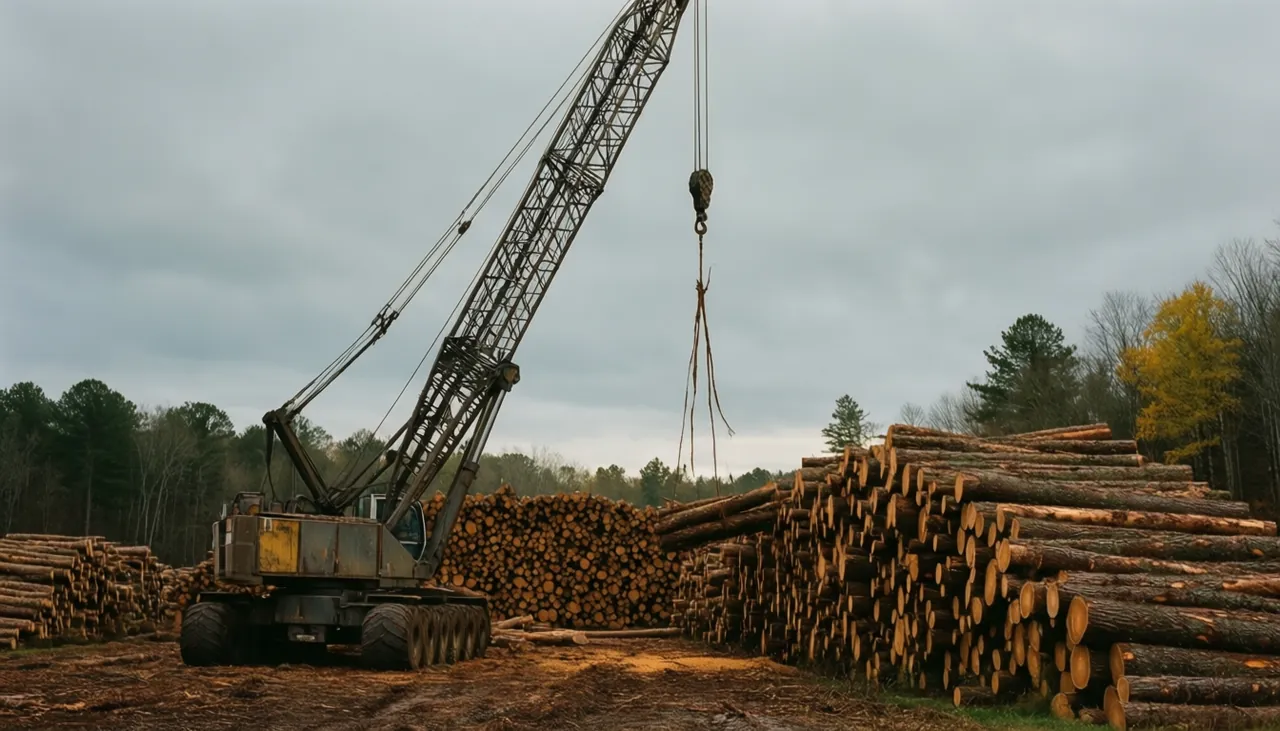
The North Carolina Court of Appeals ruled on November 4, 2026, in Enrique v. Edwards Wood Products Inc. that a host sawmill cannot disclaim an employment relationship before the Industrial Commission and then rely on one in superior court. The worker, a mechanic assigned by staffing agency CDT HR, was permanently paralyzed from the waist down in September 2023 when a crane cable snapped at the Edwards sawmill in Laurinburg and a steel blade holder struck him (Business Insurance; HCAmag).
The case. The worker filed a comp claim through CDT, then sued Edwards in September 2024 for negligence and gross negligence, seeking compensatory and punitive damages. Edwards argued it was his “special employer,” which would make the Workers’ Compensation Act’s exclusive remedy (N.C. Gen. Stat. 97-10.1) bar the suit. The court disagreed. It found the staffing agreement put hiring, payroll, benefits and comp with the agency, and noted Edwards had told the Industrial Commission that no employer-employee relationship existed. The court did not reach the worker’s own alleged negligence (HCAmag reports a blood alcohol test) or the punitive damages claim, because those trial-court rulings were not yet appealable. The case is pending below, and no dollar amounts have been reported.
Why this is a classification test, not just a plaintiff win. Earlier coverage here looked at who must prove exclusivity (Georgia) and who controlled the work (Idaho). North Carolina adds a third question: what did the host say about the relationship when it was cheaper to say it? A position taken in a comp proceeding, or implied by a staffing contract, can later be held against the host in tort. The defense that looked automatic depends on paperwork and on consistency.
Who it affects. Self-insured manufacturers, mills, warehouses and construction firms that fill maintenance and production roles through staffing agencies, especially in states where the host and agency relationship is contested. Also captives that cover the parent’s employers liability or general liability, and public entities that use contract labor.
Reserve mechanism. The lever is severity and case adequacy, with a line-of-business shift. Where the host assumes the agency carries comp, the host often reserves nothing. If exclusivity fails, the same injury becomes a negligence claim with compensatory and punitive demands. That is a different severity distribution from statutory comp benefits, and it develops on a litigated timeline: discovery, expert testimony on the injury and life-care needs, and trial or settlement. Permanent paralysis is the kind of file where case reserves tend to be revised upward as life-care and wage-loss evidence arrives (see case reserve strengthening). Punitive damages add a component that actuarial central estimates usually exclude and that may not be insurable in every jurisdiction; confirm that with counsel and your policy language rather than assuming it.
The comp side is a separate matter. The agency’s comp carrier pays benefits, and a lien or credit against any tort recovery may reduce the host’s net, but that offset does not remove the gross liability claim. Workers compensation IBNR models for the host will not capture it, because the claim never enters the host’s comp data.
Where this shows up in your reserves. Look at how your claim system codes temporary and contract worker injuries. If they sit only in the agency’s comp loss runs, they are missing from your liability triangle. Check the large-loss report and the open-litigation schedule for injuries to non-employees on your premises, and compare them to the comp severity assumptions in your last actuarial report. If you retain liability under a self-insured retention, how that retention works determines whether the loss lands on your balance sheet or your insurer’s.
What this means for your next review. Put one agenda item on the next reserve meeting: a map of temp-labor injuries showing which are reserved as comp, which as liability, and which as neither. Ask legal to pull any statements your company made in comp proceedings about the employment relationship, and to compare them to the staffing agreement and the position you would take in tort.
The call. The decision is not final; Edwards may seek review in the North Carolina Supreme Court, and the contributory negligence and punitive questions remain open. Even so, the reasoning is narrow and easy for plaintiffs elsewhere to copy: judicial estoppel-style arguments need no new statute. Expect the first adverse effects to appear on the highest-severity temp-worker files at hosts with loose agency contracts, not as a frequency increase. Reserve adequacy for such hosts is directionally light until the classification question is answered file by file.
Decision-maker checklist
- Inventory open injuries to staffing-agency and contract workers and tag each as comp, liability, or unassigned.
- Review staffing agreements for who is the employer, who carries comp, and any indemnity or additional-insured terms.
- Ask counsel to compare positions taken in comp proceedings with your litigation posture before the next filing.
- Ask your actuary whether any punitive or uninsured component belongs outside the central estimate.
- Add a temp-labor line to your large-loss review so catastrophic injuries are visible to both comp and liability owners.
Sources
- North Carolina Court of Appeals, Enrique v. Edwards Wood Products Inc., opinion, November 4, 2026
- Business Insurance, Sawmill loses bid to block injured worker’s negligence suit, November 2026
- HCAmag, Sawmill firm’s not our worker stance backfires in paralysis lawsuit, November 6, 2026
- North Carolina General Assembly, N.C. Gen. Stat. 97-10.1, exclusivity of Workers’ Compensation Act